Loading...
Serving Hollister, CA and surrounding areas. (831) 271-0388
Master HollisterDeck & Fence
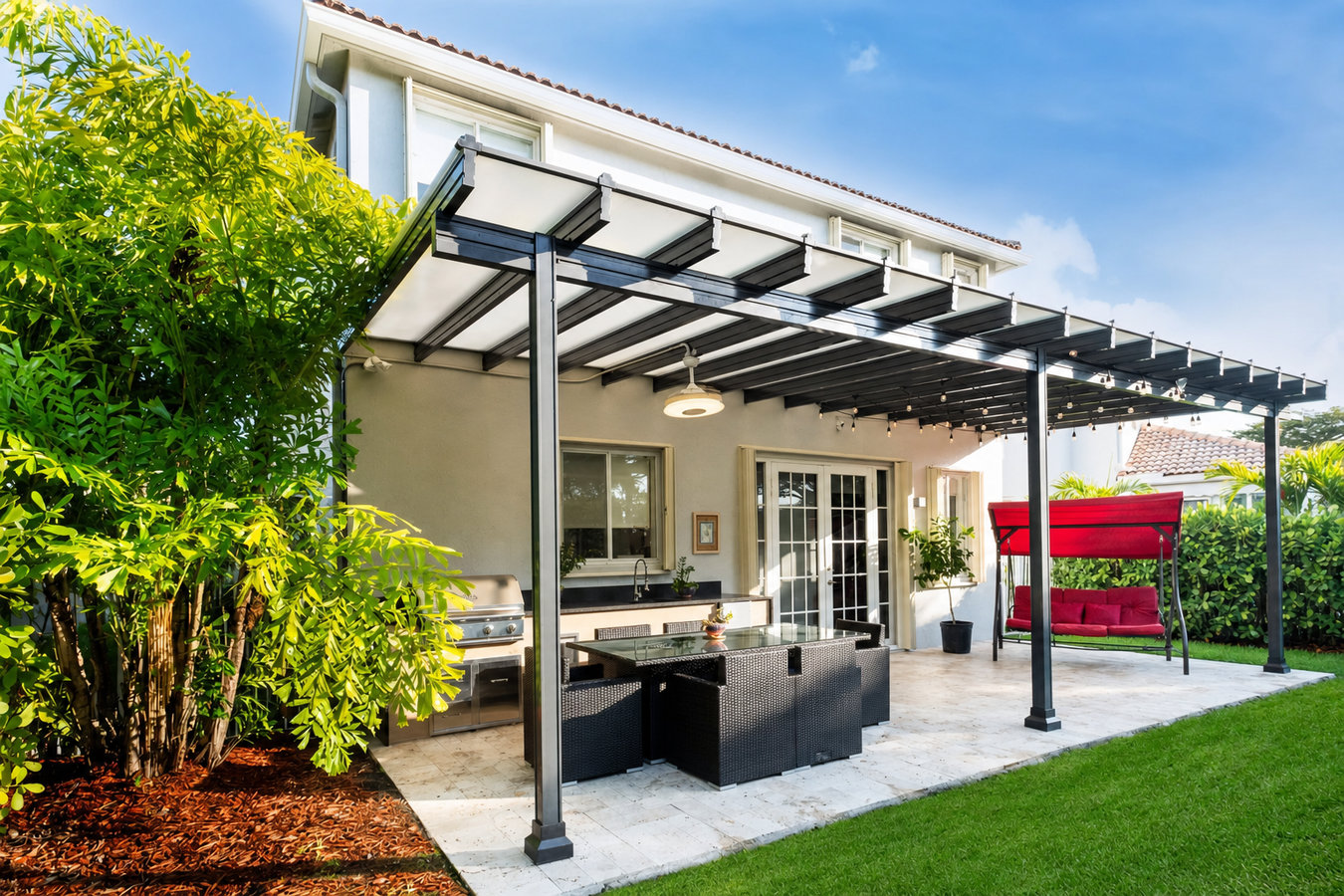
Hollister summers hit hard and fast. A properly built patio cover turns your outdoor space from something you avoid into somewhere you actually want to be - from morning coffee to evening dinners.
Covered decks and patio covers in Hollister are permanent roof structures built over an outdoor living area, attached to your home or freestanding, permitted through the City of Hollister Building Division, with most construction taking three days to two weeks depending on size and complexity.
For Hollister homeowners, the motivation is almost always the same: a backyard that goes unused from June through September because the sun makes it uncomfortable. The San Benito Valley regularly sees summer temperatures climb into the mid-90s, and without overhead cover, many outdoor spaces are simply too hot to use during the hours people actually want to be outside. A solid-roof cover can drop the temperature of your outdoor space noticeably compared to direct sun.
If you want fresh air along with shade, a covered structure pairs naturally with a screened-in porch or screened deck. We can combine both scopes into one coordinated project so you get the shade and the bug protection without managing two separate contractors.
If your outdoor furniture sits untouched for most of the summer because the sun makes it unbearable, your space needs shade. Hollister's summer heat is intense and sustained - without overhead cover, a west- or south-facing patio can feel like standing in an oven by midday. A covered structure turns that unusable space into somewhere your family actually wants to spend time.
Hollister's winters bring rain that can arrive quickly and be heavy, and an uncovered patio means scrambling every time the weather turns. If you are constantly moving cushions, folding up chairs, or giving up on outdoor entertaining from November through March, a permanent cover solves that problem for good.
If the wood overhead is soft to the touch, the structure wobbles when pushed, or you can see daylight where the cover meets the house wall, the structure has reached the end of its useful life. Hollister's clay soils can shift post footings over time. Patching a failing structure rarely makes sense - replacement gives you something safe, code-compliant, and built for the long term.
Covered outdoor living space is consistently cited as a high-value feature by buyers in Central Valley and Central Coast markets. If your backyard is currently just an open slab or lawn, adding a covered area before listing can make your home more competitive. A permitted, well-built structure also shows up cleanly in disclosure documents.
We build attached and freestanding covered structures across Hollister and the surrounding area. Solid-roof designs block sun and rain completely, while open-lattice covers filter light and let in a breeze. Both go through the same permit process and are built with post footings set to the depth that Hollister's clay soils and seismic zone require. If you want shade with open sides, a pergola installation is another option we offer that suits some properties better than a fully roofed cover.
Many homeowners add electrical during the same construction phase - ceiling fans and recessed lighting installed while the framing is open cost significantly less than adding them after the fact. If your outdoor space would also benefit from screen walls on the sides, we can combine a covered structure with a screened-in porch in a single project. Whatever the combination, we handle one permit, one crew, and one timeline.
Ties into your home's existing structure with a full roof panel that blocks rain and direct sun completely - ideal for homeowners who want maximum weather protection.
Filters light and provides partial shade while still letting in breeze and some sky - a good fit for homeowners who want the feel of being outside without full sun exposure.
Stands independently anywhere in your yard - over a pool, a detached patio slab, or a garden seating area - without tying into your home's structure.
Includes wiring for ceiling fans, recessed lighting, or outdoor speakers during the same construction phase - simpler and less expensive than adding electrical later.
Hollister sits in one of the most seismically active areas in California, near the Calaveras Fault - a location that has historically earned the nickname the earthquake capital of the world. Any permanent structure built here must be designed and anchored to handle lateral forces from ground shaking, not just the weight of the roof itself. This means footings dug deeper than a contractor from a less active area would set them, and connection hardware sized for lateral load. The USGS earthquake hazards program documents the ongoing activity in this fault zone. A contractor who pulls the permit and has the structure reviewed is protecting you - the inspection is a second set of eyes confirming the build is sound.
Hollister's expansive clay soils add another layer of complexity. Soils that swell in winter rains and shrink in dry summers create seasonal movement that can gradually shift post footings not set deep enough. Hollister also has many newer subdivisions governed by HOA design guidelines - any covered structure may require written HOA approval before you even apply for a city permit. We handle both the permit and HOA process and serve homeowners across the region, including Tres Pinos and San Juan Bautista, where the same soil and seismic conditions apply.
We ask about your space, whether you want an attached or freestanding cover, and whether your neighborhood has HOA rules. You get back to us within one business day of reaching out.
We measure your space, check your home's existing structure if the cover will attach to it, and walk through your options in person. A written estimate follows within a few days.
We submit the building permit to the City of Hollister Building Division and handle HOA approval if your neighborhood requires it. Permit review typically takes one to three weeks.
Post holes are dug and poured, concrete cures 24 to 48 hours, then framing and roofing proceed. A city inspector signs off, then we do a final walkthrough with you.
Free estimate, no obligation. We respond within one business day.
(831) 271-0388Clay soils that swell in winter and shrink in summer can shift post footings that were not set to the right depth. We dig below the active soil layer and use a concrete mix sized for local conditions - so your cover stays plumb through years of seasonal movement.
Newer Hollister subdivisions often have HOA guidelines on height, color, and roofing material. We confirm HOA requirements during the initial consultation and get written approval before a post goes in the ground - no rebuilding after the fact.
Every covered patio we build in Hollister goes through the City Building Division. A permitted structure is reviewed by an inspector, which protects your home's value at resale and keeps your homeowner's insurance valid for the addition.
North American Deck and Railing AssociationYou can verify our California Contractors State License Board license at cslb.ca.gov before you sign anything. We carry liability insurance and workers' compensation coverage on every project - and we can show you documentation without being asked.
Verify a CA contractor licenseEvery patio cover we build in Hollister is permitted, inspected, and built to local soil and seismic requirements. That combination of proper footings, HOA coordination, and a city-signed inspection is what makes the difference between a structure that stays solid for decades and one that starts to shift after a few wet winters.
An open-lattice overhead structure that provides partial shade and a framework for climbing plants or future screening.
Learn MoreAdd mesh screen walls to your covered structure to block mosquitoes and agricultural dust while keeping the outdoor feel.
Learn MorePermit review in Hollister takes time - the sooner you reach out, the sooner your backyard is ready for summer. Call us or send a message today.