
Loading...
Serving Hollister, CA and surrounding areas. (831) 271-0388
Master HollisterDeck & Fence
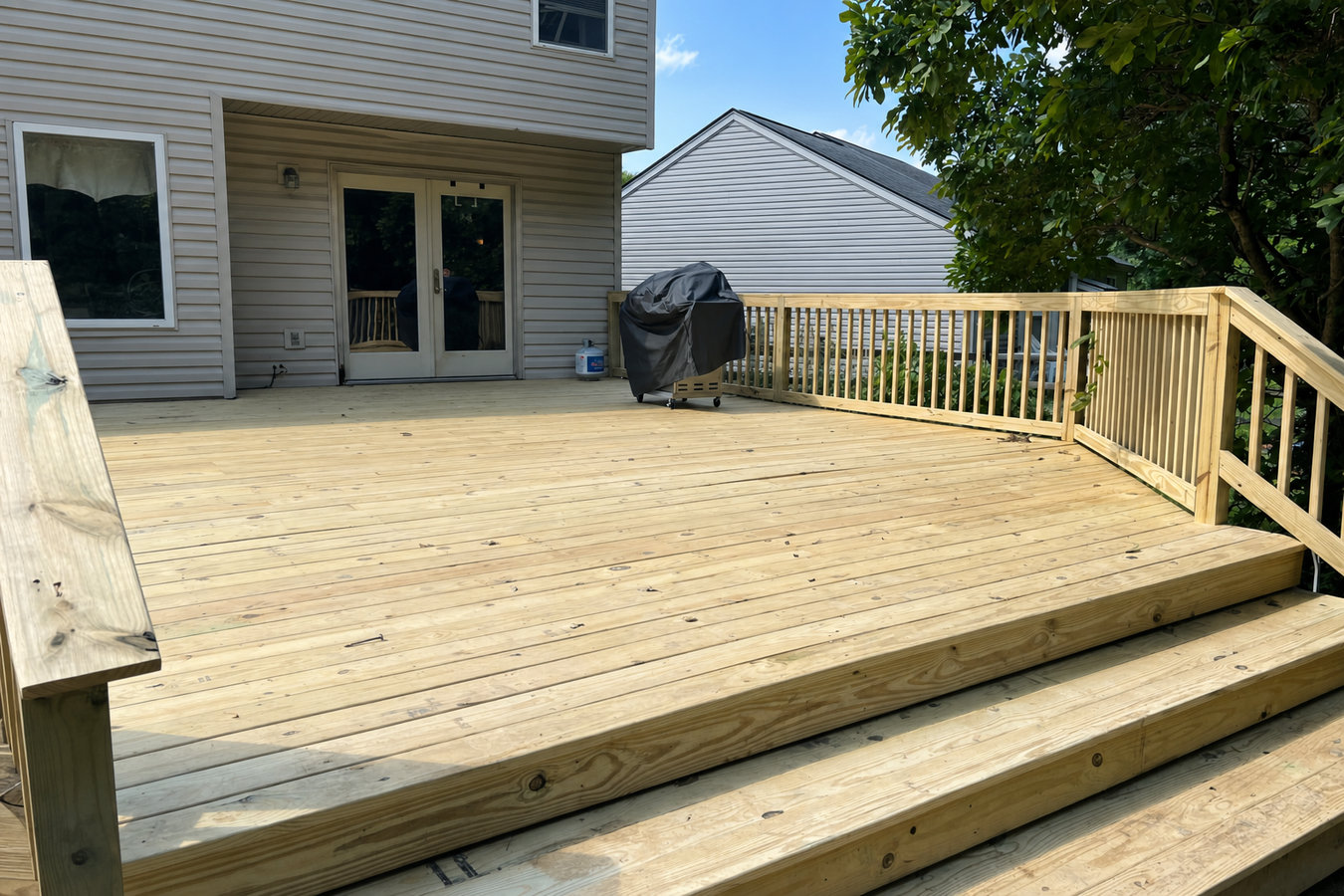
Hollister's clay soils, seismic activity, and summer heat demand a deck built the right way from the ground up. We dig footings to stable soil, frame with seismic hardware, and pull every permit before work begins.
Pressure-treated wood deck construction in Hollister means building an outdoor deck from lumber that has been chemically treated to resist rot and insects, starting with concrete footings dug into stable ground, with most residential decks in the 200 to 400 square foot range completed in three to five days of construction once permits are approved.
Pressure-treated lumber is the most common choice for deck framing in this region - and for good reason. It resists moisture, insects, and ground contact far better than untreated wood, and it forms the structural backbone of nearly every deck built in California. Whether you end up with a pressure-treated surface or choose composite boards on top of a treated frame, the quality of that frame determines how long the whole structure lasts. If you are weighing a wood surface against something lower-maintenance, take a look at our deck staining and sealing service - properly sealed pressure-treated wood holds up much better than wood that was left to weather on its own.
The biggest mistake homeowners make with pressure-treated decks is not building correctly from the start - improper footing depth, wrong fastener hardware, or skipping the permit. In Hollister, those details matter more than in many other places.
If your yard is mostly grass or bare dirt and you find yourself wishing you had a place to set up a table or grill without sinking into the ground, a deck is the most practical solution. Hollister's long warm season means a well-placed deck gets used far more than homeowners often expect. If you are avoiding your own backyard because there is nowhere comfortable to sit, a deck would change how you use your home.
If you walk across your current deck and feel boards that give under your weight, or notice boards that have split lengthwise or feel spongy near the posts, the wood has begun to rot or fail structurally. In Hollister's climate, where summer heat dries wood aggressively and winter rains can saturate it, decks that were not sealed regularly deteriorate faster than homeowners expect.
Grab your deck railing and push it firmly side to side. If it moves at all, the connections have loosened or the posts have begun to rot at the base - both are structural problems, not cosmetic ones. In a seismically active area like Hollister, a deck with compromised connections is a genuine safety concern that needs attention before the next tremor.
If you notice standing water on your deck after a winter rain rather than water draining off the edges, the boards have likely cupped or the deck was built without adequate slope. Pooling water accelerates rot and makes the surface slippery and dangerous. This is a common problem in older Hollister homes where decks were built before current drainage standards were widely followed.
We build pressure-treated wood decks from the footing up - concrete piers dug to stable ground, frames assembled with the right hardware for Hollister's seismic zone, and decking boards laid with proper spacing so the wood can expand and contract through the seasons without buckling. Every project includes permit submission and at least one city inspection before the decking goes down. If you want a wood surface with character and natural appearance, our cedar wood deck construction service is worth considering alongside pressure-treated as your surface option.
We also build pressure-treated frames as the structural base for composite decking projects. If you are leaning toward a Trex or composite surface but want traditional wood framing underneath, that is a common and practical combination. And if you already have an older deck that is mostly solid but needs protection, our deck staining and sealing service can extend the life of what you have before you commit to full replacement.
Best for homeowners adding outdoor living space to a yard that currently has no deck, with a footprint close to grade.
Best for yards with significant slope or homes where the main living level is above ground, requiring taller posts and more structural support.
Best for homeowners with an existing deck that is structurally compromised and needs to be torn out and rebuilt from the footings up.
Best for homeowners who want composite decking on top but prefer traditional wood framing as the structural base underneath.
Hollister sits on clay-heavy soils that swell when wet and shrink back down in the dry summer heat. That seasonal cycle can shift footings over time if they are not dug deep enough to reach stable ground below the active layer. A footing that moves even slightly can cause the whole deck to rack and pull apart at the connections. This is not a theoretical concern - it is one of the most common causes of deck failure in this region, and it is entirely preventable when the footings are designed for local conditions from the start. We also deal with a seismic zone that requires lateral anchoring at every connection point. Homeowners in Hollister and Tres Pinos are often surprised to learn that deck framing here needs hardware rated for sideways movement, not just vertical load - and that a city inspector will check those connections before the decking boards go down.
Hollister's summer heat - regularly above 95 degrees from June through September - also means decking boards built without proper spacing will buckle and warp within a season or two. A contractor who knows this climate leaves the right gap between boards so the wood can expand in heat without pushing against the boards next to it. That detail, combined with a first sealant application 60 to 90 days after installation, is what separates a deck that looks good for fifteen years from one that starts showing problems in three. You can review the American Wood Council's deck construction guide for framing standards, and the California Contractors State License Board to verify any contractor's license before hiring.
Reach out by phone or form and we will get back to you within one business day. We will ask about the size of the space, where the deck will be on your property, and how you plan to use it - this helps us determine whether a quick phone estimate makes sense or whether we need to see the site first.
We come to your home, walk the area, and take measurements. We will talk through layout options and give you a written estimate that covers footings, framing, decking, railings, permit fees, and cleanup. No cost surprises after you sign - everything is in the quote.
Once you sign a contract, we submit the permit application to the City of Hollister Building Division. Plan review typically takes one to three weeks. We handle this entire process - you should not need to visit the building department yourself at any point.
We dig and pour footings, frame the deck, pass the city framing inspection, then lay the decking boards and install railings and stairs. After the final inspection, we walk you through the finished deck - including when to apply your first sealant - and hand you your permit sign-off to keep with your home records.
Free written estimate. Permit handled. Clay soils and seismic zone - already accounted for.
(831) 271-0388We dig footings below the active clay layer to reach stable ground, and we specify footing dimensions that account for seasonal soil movement. A footing that moves is a deck that eventually fails - we build to prevent that from the start.
Hollister's position near the Calaveras Fault means every connection on your deck needs to handle lateral movement. We use seismic-rated post bases, joist hangers, and ledger hardware as standard - not as an add-on you have to ask for separately.
We handle the City of Hollister permit application, fee, and inspection scheduling as part of every job. You will have city sign-off in hand when the project is complete - which protects your investment if you ever sell the home.
Your written estimate covers every cost - footings, framing, decking, railings, permit fees, debris removal. What you see on the estimate is what you pay. There are no change orders for things we knew about before we started.
Every one of those points directly affects whether your deck is still sound in ten years. When you are ready to move forward, call us or use the contact form and we will set up a time to come look at your yard.
If you want a natural wood surface with a richer appearance, cedar offers better natural rot resistance and a warmer look than pressure-treated boards.
Learn MoreExtend the life of your new or existing pressure-treated deck with the right sealant applied at the right time - critical for Hollister's climate.
Learn MorePermit season fills up - reach out now and we will lock in your build date before the spring rush.