Loading...
Serving Hollister, CA and surrounding areas. (831) 271-0388
Master HollisterDeck & Fence
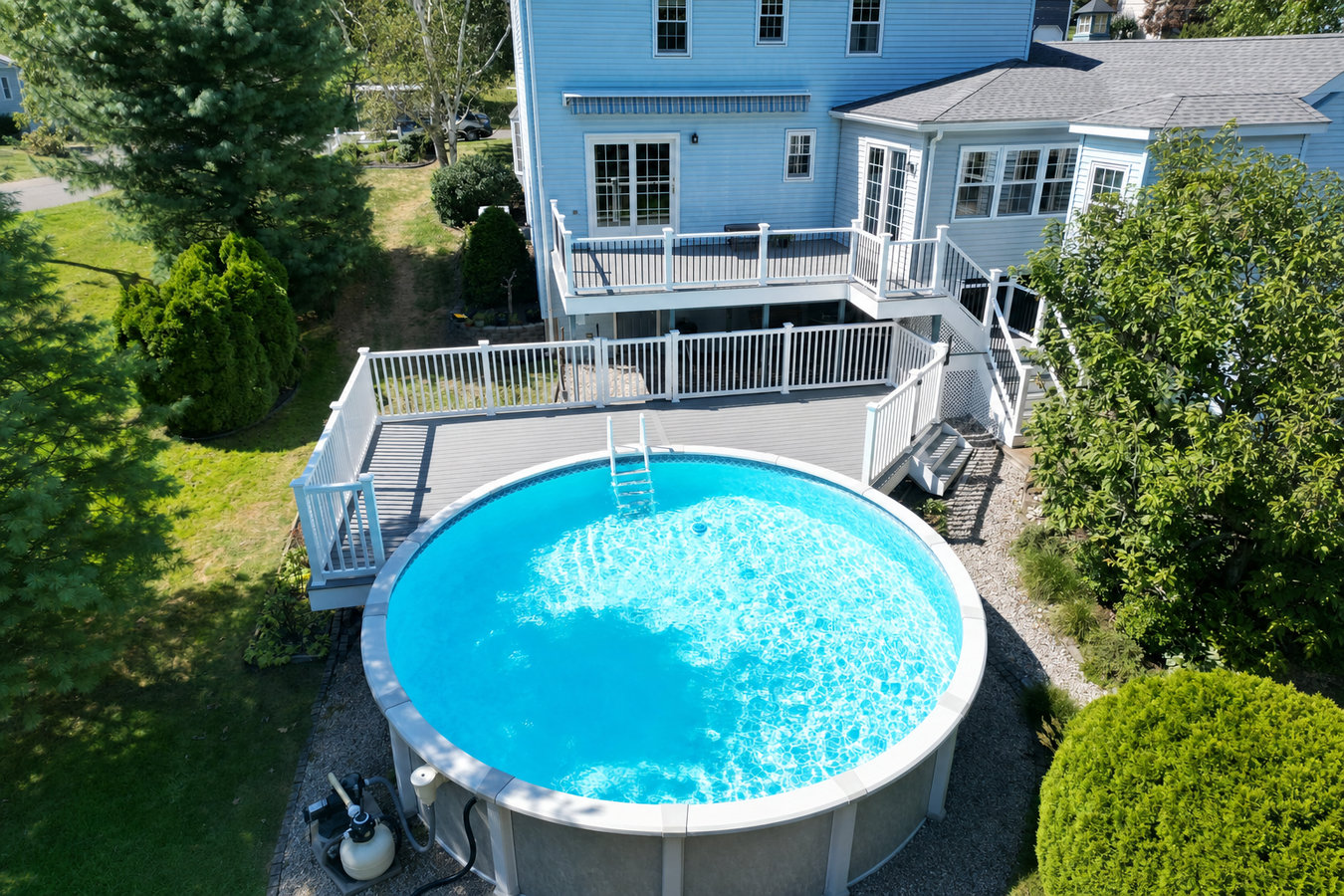
Clay soils and summer heat crack poorly built pool decks fast. We prepare the ground right, use heat-reflective finishes, and pull the city permit so your deck is safe, legal, and usable all season.
Pool deck construction in Hollister means surfacing the area around your pool with concrete, pavers, or a coating that is safe underfoot and built to handle the local clay soils and summer heat, most projects take three to seven days of active work plus one to two weeks for city permit approval, and the full timeline from first call to finished deck is typically four to six weeks.
A pool deck gets wet every day, absorbs years of summer sun, and sits on soil that swells and shrinks with every Hollister rainy season. A deck built without accounting for those conditions will start cracking and shifting within a few years - sometimes sooner. The ground preparation under the surface is where quality pool deck construction is either done right or cut short. If you are also thinking about adding a fence around the pool area for safety or privacy, our vinyl fence installation service can be coordinated alongside the deck build.
The City of Hollister requires a building permit for new pool deck construction. That means a city inspector checks the work at the appropriate stage - which is actually a good thing for you as a homeowner, because it gives you documented proof the deck was built to current standards. We handle the permit process as a standard part of every job so you do not have to navigate it yourself.
Cracks in your existing pool deck - especially ones that are widening or have a lip where one side sits higher than the other - mean the ground beneath has moved. In Hollister, this is often caused by the clay soils expanding and contracting through wet winters and dry summers. Small hairline cracks can sometimes be patched, but cracks that are growing or uneven usually mean a full replacement is the smarter investment.
If your deck is unbearable to cross on a July afternoon without sandals, that is not just uncomfortable - it is a sign your current surface is not suited to Hollister's summer heat. Older concrete decks with dark finishes or no reflective coating absorb and hold heat in ways that newer materials do not. A new deck with the right finish can make a real difference in how much you actually use your pool area.
After rain or heavy splashing, water should run off your deck within a few minutes. If you notice standing water in spots, the deck has either settled unevenly or was never graded properly in the first place. Standing water is slippery, accelerates surface wear, and can eventually work its way under the deck and cause more serious damage below.
If the surface of your deck has started to pit, flake, or feel rough and uneven underfoot, the top layer of concrete has begun to break down. This is common on older decks that were never sealed or have not been maintained. Beyond looking worn, a deteriorating surface is hard on bare feet and harder to keep clean around pool water.
The right surface for your pool deck depends on your budget, how you use the space, and how much maintenance you want to do over time. Brushed concrete is the most popular choice because it is durable, affordable, and the broom finish naturally provides traction underfoot. Stamped concrete gives you the look of stone or pavers while keeping the strength of a single poured slab - a good option if aesthetics matter as much as performance. Paver decks are easier to repair section by section and have some natural flexibility that helps them handle the minor ground movement common near the Calaveras Fault. For existing concrete that is cosmetically worn but still structurally solid, a resurfacing coating can refresh the surface for a fraction of full replacement cost.
Whatever surface you choose, we work through the full project - permit application, ground preparation, pour or installation, city inspection, and final walkthrough. If you are thinking bigger and want to combine a pool deck with an adjoining main deck or entertaining space, our custom deck design and build service handles projects that connect multiple outdoor areas into one unified plan.
For homeowners who want a durable, cost-effective surface with a classic look and a slip-resistant broom finish.
For homeowners who want the look of stone or pavers with the durability of poured concrete.
For homeowners who want individual stones that are easier to repair section by section and flex slightly with ground movement.
For homeowners with an existing concrete deck that is cosmetically worn but structurally sound and does not need full replacement.
Two local conditions shape every pool deck project here in ways that national contractor guides and YouTube tutorials do not account for. The first is the clay-heavy soil across much of the San Benito Valley. Clay swells when it absorbs winter rain and shrinks back in the summer heat - that cycle puts steady stress on anything sitting on top of it. A contractor who does not address this during ground preparation will build you a deck that starts cracking within a few wet seasons. The second is Hollister's position near the Calaveras Fault. Minor ground movement here is genuinely common and it stresses rigid concrete surfaces over time. Reinforced concrete and properly installed paver systems handle this better than unreinforced slabs. Homeowners near Tres Pinos face the same soil and seismic conditions and benefit from the same approach.
Surface choice matters more in Hollister than in many other California cities because of the summer heat. Hollister regularly sees days above 95 degrees during peak pool season, and a dark or dense concrete surface can get hot enough to be painful to walk on barefoot. Lighter colors and specific coatings stay noticeably cooler - a detail that directly affects how much your family actually uses the deck. Homeowners in Morgan Hill see similar summer temperatures and the same preference for lighter, cooler surface finishes. Booking in late fall or winter, when contractor schedules have more availability, can also get your project a faster start date and sometimes better pricing heading into the following summer.
You reach out and we schedule an in-person visit - photos help, but they cannot show slope, soil conditions, or access challenges. We measure the area, ask about your goals and budget, and look at what is already there. You typically get a written estimate within a few days of that visit.
Once you choose a contractor, you decide on the surface material, finish, color, and any features like a border or built-in steps. Everything goes in writing - scope of work, materials, timeline, payment schedule, and what happens if something unexpected comes up. We reply to questions within one business day.
We apply for the required building permit from the City of Hollister before any work begins. This step typically takes one to two weeks depending on the city's current workload. Once the permit is approved, you get a start date - use this time to clear furniture, potted plants, and anything stored near the pool.
The crew excavates, grades for drainage, and compacts the base - the most important part of the project, even though it is the least visible. After the pour and city inspection, we walk the finished deck with you, explain the sealing schedule, and confirm the permit is closed out.
We visit your yard, walk through your options, and give you a written estimate - no obligation, no sales pitch.
(831) 271-0388The clay-heavy soils in the Hollister and San Benito County area expand in wet winters and shrink in dry summers - that seasonal movement is the leading cause of cracked pool decks here. We excavate, compact the base, and in some cases add steel reinforcement to account for local soil conditions from the start.
Hollister experiences more frequent small earthquakes than most California cities because of its proximity to the Calaveras Fault. We use reinforced concrete or paver systems designed to handle minor ground shifts rather than cracking apart over time. Ask your contractor how they account for seismic activity - a good answer is specific.
New pool deck construction in Hollister requires a city building permit. We pull the permit, coordinate the required city inspection, and get the final sign-off as a standard part of the job. That paper trail protects your homeowner insurance and matters when you eventually sell the home.
Hollister regularly sees summer temperatures above 95 degrees, and a dark or dense concrete surface can get painfully hot underfoot by midday. We recommend and use surface finishes chosen specifically for heat reflection, so the deck stays usable all day - not just in the morning hours. The Pool and Hot Tub Alliance also emphasizes slip-resistant finishes as a core safety requirement for any pool deck.
A pool deck is one of the more demanding construction projects a homeowner can take on - it sits in water spray every day, bakes in the sun, and rests on soil that moves with the seasons. Getting it right requires local knowledge, proper ground prep, and the right surface choice for the conditions your yard actually faces. Before hiring any contractor, verify their license on the California Contractors State License Board website and ask specifically how they handle Hollister's clay soils and seismic conditions in their ground preparation process.
Add privacy and security around your pool area with a low-maintenance vinyl fence sized for your yard.
Learn MoreCombine your pool deck with a custom main deck design for a unified outdoor living space built to your backyard layout.
Learn MoreSpring and summer bookings fill up fast - contact us now to lock in your start date and get a written estimate before the busy season arrives.